You post consistently on Instagram. The photos are good. The engagement is decent. But when someone comments "how do I order?" or "what is the address?", you end up typing the same answer for the hundredth time in the comments.
And the link in the bio? It leads to iFood, or to the website, or to nowhere useful. The customer who wants to order by WhatsApp does not find the number. The customer who wants to see the menu before deciding does not find it either. The one who wants the address needs to ask in the comments.
This is what happens when you try to solve multiple customer needs with a single link.
An Instagram customer can want different things at different times: see the menu with photos and prices, order by WhatsApp without searching for the number, check what time you open today, find your address on Maps, order on iFood but not know your profile link.
A single link satisfies only one of these needs. A link hub satisfies all of them.
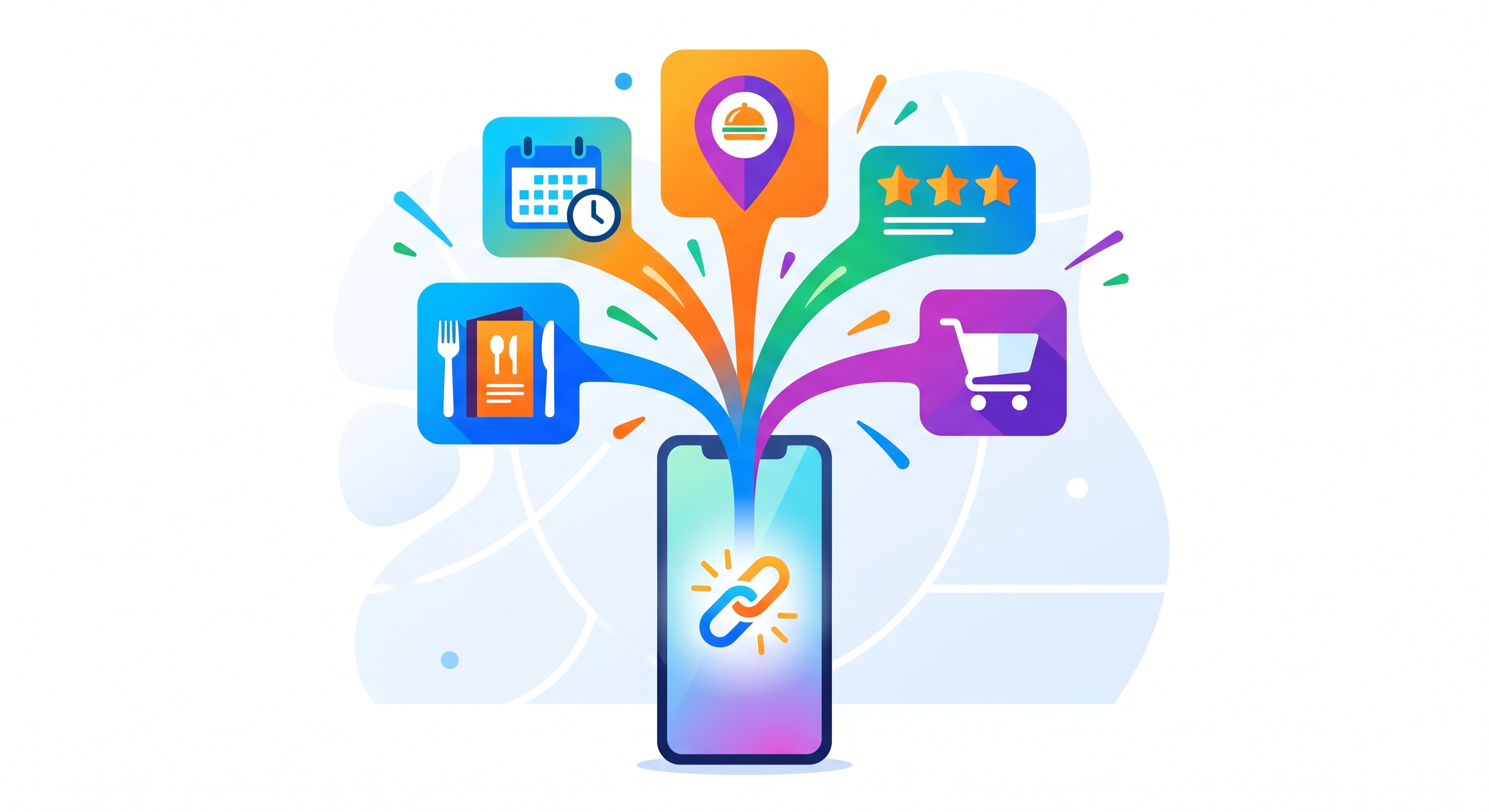
A link hub is a simple page — something like crdp.io/your-restaurant — that centralizes all the important buttons for your customer. When they click the bio link, they see: digital menu, WhatsApp, iFood, Maps, Instagram. Everything in one place, organized, working on any cell phone.
Every time a customer gives up because they could not find what they needed in your bio, you lose a potential sale. The link hub eliminates this friction. The customer finds everything quickly, chooses their preferred channel and makes contact.
In crdp.io you create your link hub with digital menu included in a few minutes. The address is crdp.io/your-restaurant, appears on Google and works perfectly on mobile. Free to start.
One link in the bio is not enough because your customers have multiple needs. A link hub solves this once and for all — and the best part: you set it up once and it works forever.
