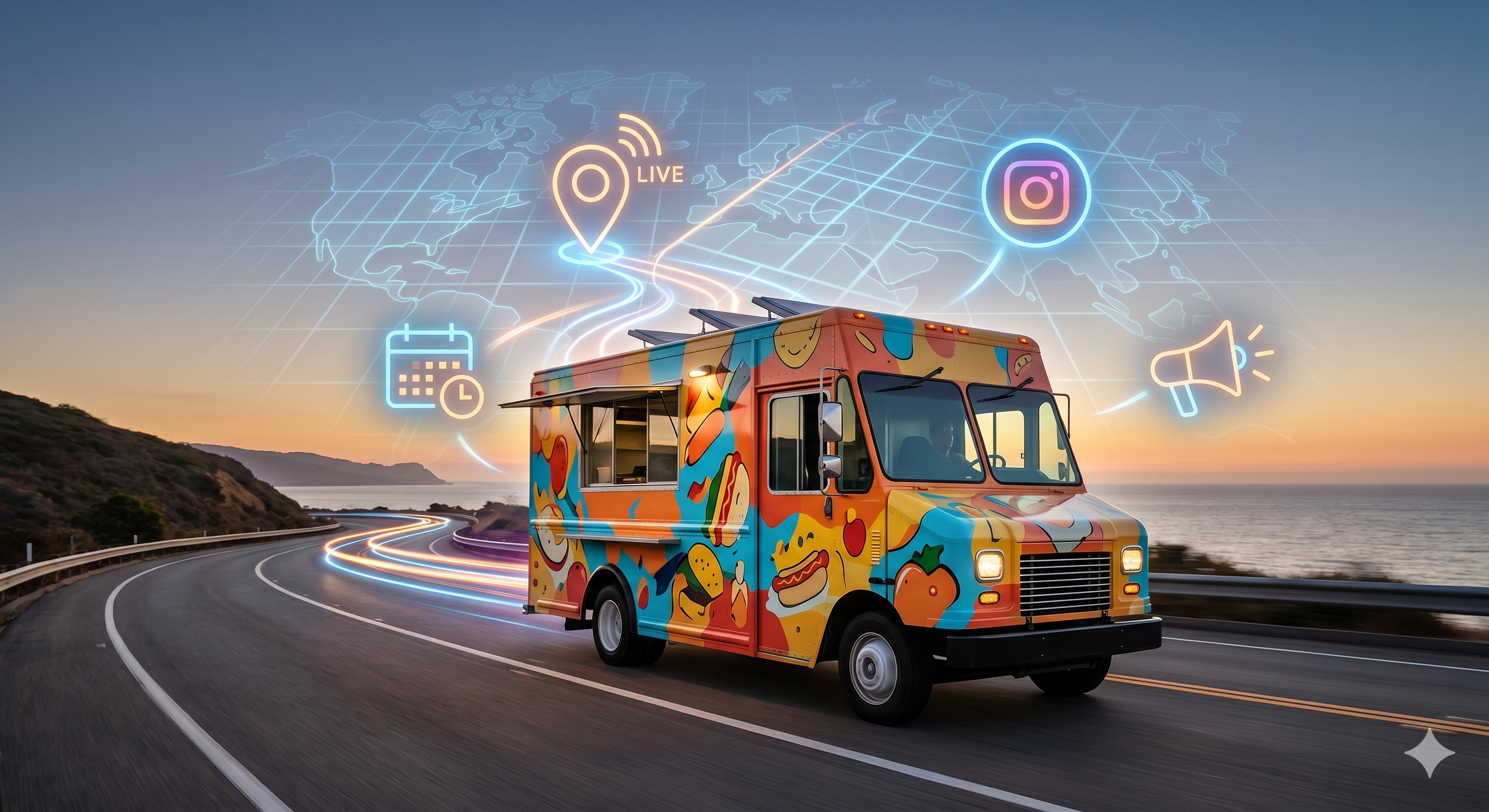
A food truck is a different business: the address changes every day, the customer base varies by location, and communication needs to be fast and efficient to let people know where you are before they make the decision to go eat somewhere else.
But precisely because of this mobility, digital presence is even more important for a food truck than for a fixed restaurant. It is your fixed point in a world where everything changes.
The fixed restaurant customer learns the address once and comes back. The food truck customer needs to know where you are today, this Friday, this weekend. If they do not find that information quickly, they order elsewhere.
A fixed digital address — even if the physical address changes every day, your digital address stays the same. Something like crdp.io/your-foodtruck that the customer can always find. There you put your location, menu and contact.
Updated location in real time — the most important information for a food truck customer is where you are today. Use Instagram Stories, WhatsApp Status and Google Business Profile to communicate your daily location.
Digital menu always accessible — the customer finds your truck at an event and wants to know what you serve before joining the line. A digital menu accessible by QR code or link solves this.
Fast WhatsApp contact — food truck customers often communicate via WhatsApp to find out location, hours and reservations for events.
Print QR codes on banners, menus and packaging. The customer scans and goes directly to your page with menu and WhatsApp contact. Generate free QR codes for your food truck in crdp.io.
When you have a confirmed spot — a food court, a regular weekly event — communicate in advance on all channels. Create a routine: every Monday post where you will be that week. Customers who follow this routine become loyal even without a fixed address.
The food truck that invests in digital presence stops depending exclusively on foot traffic and starts building a loyal audience that follows them wherever they go. That is the difference between selling only at events and having regular customers.
